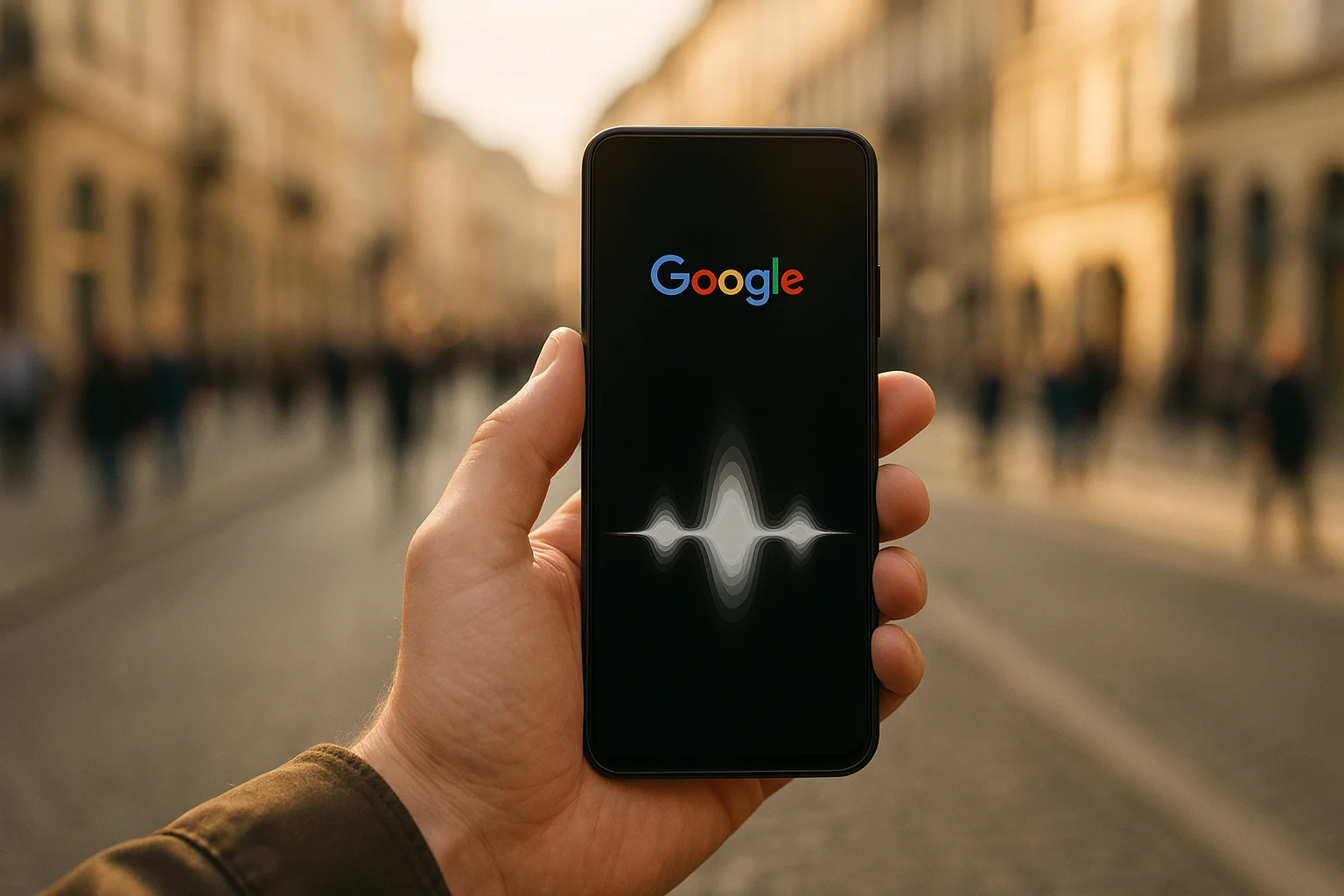
On March 26, 2026, Google officially expanded Search Live to more than 200 countries and territories, according to an announcement published on The Keyword. The feature, previously limited to the United States, is now available in every market where AI Mode is accessible — and it changes the SEO game fundamentally.
Search Live lets users have real-time voice conversations with Google, optionally with camera input. Ask a question out loud, get an AI-generated audio answer, then keep the conversation going. This is the shift from keyword-based search to dialogue-based search. The expansion runs on Gemini 3.1 Flash Live — a natively multilingual model built specifically for real-time conversational AI.
What the numbers say
When someone points their camera at a product and asks "what is this and where can I get it cheaper?", the answer lands directly in their ear. Your site might be cited — or completely skipped. The difference comes down to how well your content is structured for AI extraction.
Voice queries are fundamentally different from text queries: they average 7-10 words versus 3-4 for typed search, they're more conversational, and they're almost always framed as direct questions. Content optimized purely for short-tail keywords is invisible in this new search paradigm. This is essentially GEO — Generative Engine Optimization applied to voice.
The SEO impact you need to act on
Search Live is built on Google's AI Mode — the conversational layer of Google Search. What we know about automatic citations in AI Mode applies here, with an added urgency: responses are audio-only, so cited sources aren't visually displayed. Either the AI mentions you by name, or you don't exist in that interaction.
Sites that perform well in Search Live share three characteristics:
- Direct answers at the start of paragraphs — the AI extracts the first clear answer to a question, not the best rhetorical prose
- FAQ or HowTo structured data — schema markup significantly improves your chances of being the cited source
- Strong E-E-A-T signals — experience, expertise, authoritativeness, trustworthiness. Google prioritizes sources it can identify and verify
Three things to do today
Search Live isn't a trend to monitor — it's live traffic happening right now. Three concrete actions:
- Audit your content for long-form queries — identify 6+ word queries where you could rank. Use Search Console (length filter) and AnswerThePublic.
- Rewrite your section introductions — the first sentence of every section must answer the question directly. The AI doesn't wait for your third paragraph.
- Add Speakable schema markup — this tag explicitly signals to Google which parts of your content are optimized for audio delivery. It's the most underused SEO tag right now.
The bottom line: Search Live launching in 200+ countries simultaneously signals that Google considers it production-ready. Voice AI search is no longer a future consideration — it's shaping search results today.
Cicero's take
We thought we had 12 months. We may have 3. The simultaneous global rollout — not a phased expansion — signals Google's confidence in Gemini 3.1 Flash Live's maturity. Businesses that haven't restructured their content for conversational search are going to see it in their Search Console data by summer.
Sources
- → Google — The Keyword — official announcement of Search Live global rollout
- → TechCrunch — coverage with Gemini 3.1 Flash Live details
- → Google DeepMind — Gemini 3.1 Flash Live model overview
Go further: